
The inefficiency of client services, like a fish prick stuck in the throat, not only slows down and weighs the process within the enterprise, but also leaves each user coming for help feeling a deep sense of weakness and burning. In the current business environment, the balance between response speed and service quality is becoming increasingly difficult to grasp, and the balconies of the scheduling pressure of artificial passenger service, the bombing of repetitive problems and the delay in updating the knowledge base are intertwined and constitute a seemingly incomprehensible knot. The ease of the process is one of these things, with its technical base and service logic innovations, which provide a clear path to the efficiency of the service, so that companies no longer need to make a passive painful choice between man-crashing and waiting by users.
The core value of the case of the efficiency of the client-serving-vulnerability service lies in the fact that it does not simply provide a set of tools, but rather, it links the previously fragmented client nodes into an organic whole through process re-engineering. In the traditional mode, user problems are subject to multiple rotations, each of which means that information is lost and wasted with time, while the most appropriate processing port can be automatically matched by a single access, based on the attributes and urgency of the problem, with the help of a skunk-and-touch smart route and worksheet system. Users need not repeat their claims, as the system has carried key information in its entirety to each dialogue window through context memory, a continuity that allows the temperature and efficiency of the service to coexist and effectively avoids the deep fatigue that repeat communication brings.
This efficient operation is underpinned by a smart response mechanism that covers the needs of the whole scene. Whether it is pre-sale counselling or post-sale security, the easily deviable AI knowledge base can, with its powerful semantic understanding, retrieve the most accurate answers from the mass of information in a very short period of time. The system can capture the core needs behind even if the question is verbalized and fragmented, as opposed to traditional key word matching, which is more understandable to the user. This is not only a victory for technology, but also a great care for the user experience, and when the user feels that his problems are truly understood, the anxiety of waiting will naturally recede. Smart answers are not just cold machine responses, but more like experienced, senior guests who can adjust their response to the direction of dialogue.
At the level of people-AI synergy, the ease of error shows a rare wisdom. It is aware that artificial intelligence is not everything-powerful and that, in the face of sensitive issues that are complex, emotional or require manual intervention, the system transfers dialogue to real people in a smooth and seamless manner, and presents AI ' s completed preliminary diagnosis, user portraits and history interactive records on the interface between manual passenger service. This “AI-first-hand-down” model allows every artificial passenger to have a kind assistant who, without having to work on the cumbersome information-gathering, can focus on emotional communication and problem-solving, thus significantly increasing the resolution rate of a single session and the satisfaction of users. This is the most commendable aspect of the case of the more efficient client-friendly, which has brought technology back to its place as a supporter and a performer.
Distortion-prone statements provide business managers with a perceptible eye, as does monitoring. Through real-time data boards, management can clearly see the number of waiting persons in the queue, the average response time, the percentage of problem classification and the workload of the individual on the passenger service. These data are no longer cold figures sunk backstage but are an important basis for optimizing scheduling, adjusting the narrative and updating the knowledge base. Based on a multidimensional data analysis, managers can accurately identify bottlenecks in the process and adjust them in a timely manner, a data-driven optimisation model that allows service quality to be improved not by blind people but by targeted and precise means. A strong data insight makes each service a quantifiable asset.
The configuration environment of low or zero codes is another great asset that can be easily detached and effective. For many SMEs, IT resources are scarce and it is impossible to form a large development team for a customer service system. The ease of error takes this reality fully into account, and its visualized process editor allows business people to set up dialogue processes, trigger conditions and worksheet rules as flexible as building blocks. Whether the ad hoc surge in emergency talktories during the major electric power surge or the exclusive service process tailored to specific product lines can be online in a short time, this agility is just the right fit for the rapid and iterative demands of the current market environment. Enterprises need no longer change their business logic to adapt to software, which itself becomes soft and flexible.
In terms of stability and co-processing capacity, the ease of misusing actual performance proves that it is a reliable gene for enterprise-level applications. The high frequency operational peaks are often the most demanding test of the passenger-service system, and with its advanced distributed architecture and load-balanced technology, the system is able to maintain a fluid response even in the event of a sudden surge of consultations, effectively avoiding the loss of clients and negative reputations resulting from the system collapse. The reliability of each conversation is well preserved, and historical chat records are kept in their entirety, whether the user refreshs the page or replaces the device, a reliability that gives the user a certain sense of security. Stability is not only a technical indicator, but also a cornerstone of the credibility of enterprises.
The vulnerability to the differential demand of different industries also shows sufficient inclusiveness. Education is concerned with the conversion of appointments for trial classes, the electrician sector is concerned with the rapid processing of logistics and the return of goods, and the financial sector is demanding for compliance and information security. The ease of slurring through modularization of functional combinations can provide customized solutions for different business scenarios. This flexibility ensures that public and private operations are as efficient as private, and that users in different industries are able to enjoy a seamless service experience on their own tracks. The depth of fit, which covers many vertical areas, makes it easier to bend not only as a universal tool but also as an expert in the industry.
At the level of the practical aspects of the increased efficiency of client services, the ease of error is impressive for the “time” compression. In the case of a typical application scenario for an electric power platform, the average lead time dropped sharply from the original 180 seconds to less than 15 seconds after access was crooked, while the one-time solution rate increased from 45 to 78 per cent. These intuitive data changes, not just a leap in numbers, mean that every burning waiting client can be more responsive and that every unpleasant communication experience can be resolved in a timely fashion. This efficiency shift is a respect and value that can be felt directly for end-users.
The ease of error offers not only efficiency gains, but also a new way of working. The client is freed from the bored, repetitive, low-value labour and focuses on the high-level services that require deep thought and emotional resonance. When staff members ' sense of work achievement is satisfied, team stability and motivation naturally increase, and this inherent cohesion eventually emerges from the externalization of service quality to form a virtuous circle. Enterprises are using the easy to bend, not just to cut costs, but to invest in the long-term value of brands.
The word template and the rapid response depth sediment function keep the team service level on the same high-water line. The good responses of senior staff members were broken down into reusable standard modules, and new staff members could use the sedentary wisdom to quickly enter their roles and export high-quality services without having to go through a long treachery period.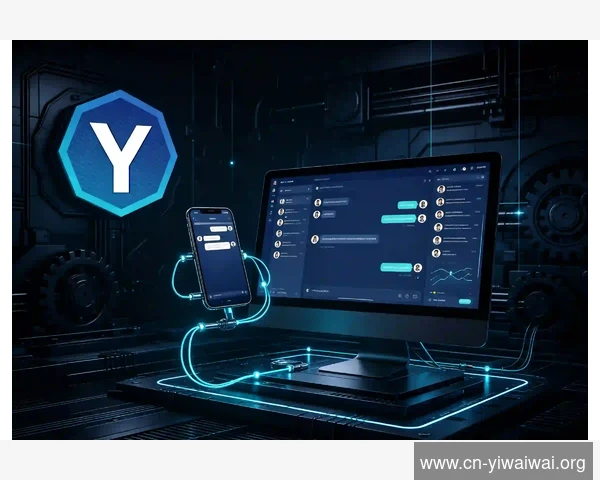 The reuse of such knowledge assets has significantly reduced the marginal cost of training and has allowed for a team to provide overall quality of services that does not fluctuate significantly as a result of the movement of staff. On this basis, collaboration within the team has also become more intensive and the consultation and referral processes for difficult issues have become light and efficient.
The principle of simplicity and practicality is also followed in the design of interfaces, where information is clearly presented, both by the user and by the seating end, and there are no redundant interferences. Behind this philosophy of design is a profound understanding of efficiency, because every vision of drift and hesitation to click is an intangible stretch of service. A smooth interface, which allows the client to remain focused and efficient, and a clear and direct guidance for each user ' s query, is a very valuable quality in modern business communication.
The path revealed by the case of the more efficient client-friendly services is precisely the direction that many enterprises are now pursuing in the digital transition wave. It has demonstrated by practical action that efficiency gains do not depend on blindly increasing human resources, but rather stem from the subtle application of deep optimization and smart tools to established processes. When technology is no longer a barrier, services return to the most genuine level of communication and resolution, which is the core value that all business activities seek.